Friday, September 30, 2005

Everything Old Is New Again

Book Cover: Traditional Scandinavian Knitting

I got a new knitting book--the first one in a year. (I've been showing great restraint, always reminding myself that I don't play with all the toys I have already.) Sheila McGregor's Traditional Scandinavian Knitting (1984) was long out of print, but it's back, and quite reasonably priced (in contrast to most of the new books aimed at today's many novice knitters). Here's the blurb from the back:

An expert on traditional Scandinavian knitting explains the distinctive craft's origins, its various types, and techniques, in this classic guide. Sheila McGregor's in-depth treatment ranges from the regional styles of Norway, Sweden, and Denmark to those of the North Atlantic Islands of Faeroe and Iceland. Vibrant patterns for an array of garments include: Jerseys; gloves and mittens; stockings; and caps. Illustrated with 191 black-and-white and 19 color pictures, this volume is well known and prized among longtime practitioners of the craft. Its return to print will delight a new generation of knitting enthusiasts.

Book Cover: Traditional Fair Isle Knitting

My copy of McGregor's The Complete Book of Traditional Fair Isle Knitting is the original British version, and I've had it since the early eighties. I sold my Alice Starmore books on eBay last year--they turned out to be just so much eye candy as far as I'm concerned. This is the book that I turn to every time I knit color work of any kind, and I've spent hours pouring over the photos and patterns. I'm giving my new book the same treatment. Hey, look! Eleven ways to decrease for the top of a cap, on page 156. Let's try 'em all! Stocking heel turnings I've never seen before. Twined knitting! Z-twist yarn!

Monday, September 26, 2005

John D. MacDonald: My Ft. Lauderdale Vacation

Book Cover: Lonely Silver Rain

When I was putting together the list of Web pages for Tony Hillerman a while back, I also found a few for another favorite genre author, John D. MacDonald. When I feel the need for a long mental vacation, I get out my 21 Travis McGee novels and visit him and Meyer in Ft. Lauderdale, 1960's style. This was especially theraputic when I was waiting for my committee to read my dissertation. Here are some Internet resources I found interesting.


  • Authors and Creators: John D. MacDonald. It mentions that he also wrote as John Wade Farrel, Robert Henry, John Lane, Scott O'Hara, Peter Reed, and Henry Reiser. (1916-1986). This page focuses mainly on Travis McGee trivia.
  • John D. MacDonald Bibliography. When I was trying to accumulate all the Travis McGee books, I had a hard time finding a list. I found one here, along with many other MacDonald novels. I haven't read more than six of them, but I enjoyed them all. The writing is engaging, he draws characters and situations economically but effectively, and the plots are solid, complex, and satisfying.
  • The John D. MacDonald Homepage. "Here you will find some information on John D. MacDonald, a list of titles, the 1996 Conference Review, and the JDM Bibliophile. The JDM Bibliophile was the oldest continuously- published magazine in the United States devoted to a single crime fiction author. It was first published in the mid-Sixties by Len and June Moffat. It has ceased publication."
  • The Travis McGee Series. A well-done fan page.

Here's the list of Travis McGee novels I once struggled so hard to accumulate.

  1. The Deep Blue Good-By (1964)
  2. Nightmare in Pink (1964)
  3. A Purple Place for Dying (1964)
  4. Quick Red Fox (1964)
  5. A Deadly Shade of Gold (1965)
  6. Bright Orange for the Shroud (1965)
  7. Darker Than Amber (1966)
  8. One Fearful Yellow Eye (1966)
  9. Pale Gray for Guilt (1968)
  10. The Girl in the Plain Brown Wrapper (1968)
  11. The Long Lavender Look (1970)
  12. A Tan and Sandy Silence (1971)
  13. Dress Her in Indigo (1971)
  14. The Scarlet Ruse (1973)
  15. The Turquoise Lament (1973)
  16. The Dreadful Lemon Sky (1975)
  17. The Empty Copper Sea (1978)
  18. The Green Ripper (1979)
  19. Free Fall in Crimson (1981)
  20. Cinnamon Skin (1982)
  21. Lonely Silver Rain (1984)

Thursday, September 22, 2005

Boring, Self-Concious Post About Blogging

When I started this web log, I resolved to post every other day, to not natter on endlessly and self-referentially about the blogging process, and to always include some little nugget of "content" that would inform or amuse. It wasn't long before I failed on all counts. I had three seven-day work-weeks in a row, and soon fell behind in my posting. When I had a little leisure to devote to the web log, I began to tweak the Blogger templates instead of posting. This was educational, but not very blog worthy. (I was surprised how inefficient, how wasteful of bandwidth the templates are. I should write my own. If only I hadn't spent so many hours playing with them already!) Oh, I also got approved for the Knitting Blogger Webring. Go ahead, push my button!

Over at Hoarded Ordinaries, Lorianne has kindly provided a link to her teaching web log. I really enjoyed following this last school year. I fantasized about having an able and willing group of students working at that level. Whenever I snag a capable writing student, I have to tell him or her, "Go take the GED exam!" I'm currently working with a young lady with several barriers to self-expression. I think she has lots of potential, but all communication is a physical struggle for her. My focus is finding technological solutions for her. I can't help but envy Lorianne a little bit.

Monday, September 19, 2005

Caterpillars in the Garden

Labor Day was a good day for caterpillars. I found a couple of these sphingids ignoring the tomatoes and potatoes and chowing down on a solanaceous weed. These fellows grow up to be sphinx moths, sometimes called hummingbird moths because they resemble hummingbirds in size, shape, and behavior. I'm not a big lepidopteran fan, but I always enjoy these big moths.

Addendum: As an insect taxonomist, I'm always reluctant to slap a specific epithet on an insect if I haven't checked the key characters. I'm reasonably certain that these critters were tobacco hornworms (Manduca sexta), but I didn't grab them and check the keys. I confess I also failed to identify the host plant by examining floral characteristics. The worms ate that part of the homework, so I can't tell you if they were on nightshade, or on some Physalis species. I am a lazy naturalist. I am overcome with guilt.

Sunday, September 18, 2005

Redhat

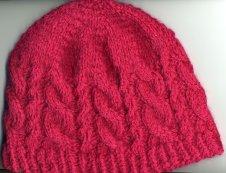
red cabled hat

You might expect from the title that this post will be about Linux, but it is actually just another finished hat picture. Knit of an interesting chunky Navajo-plied wool yarn, it is currently on consignment at the Appalachian by Design shop at the Greenbrier Resort. (See my September 2 post.) I know the cable-theme is getting a bit repetitious; I'm a little tired of it too, but it is a great way to use some of my odds and ends of strange yarns. I don't need to swatch these hats; I simply start from the top, a la Barbara Walker, increase every other round until the top measures between five and six inches across, then stop increasing and start knitting a pattern that will draw up, yet be stretchy. Ribs work well, and so do cables. Ever since I applied to join the Knitting Blog Webring, I feel the need to keep a knitting entry prominent on the lead page. I'm not sure what effect this has on people browsing for something about Pocahontas County. That is where I do my knitting, but does it have broader significance? Maybe something about the history of knitting in Pocahontas County. Don't laugh. I have data.

Friday, September 16, 2005

Arachne in the Garden

Garden spider on goldenrod

On Labor Day, I rested from my canning labors long enough to check the garden for more tomatoes, cucumbers, and squash. What I found there was more faunal than floral. It was a good day for spiders and caterpillars. This beauty was hunting on a patch of goldenrod, so I had to get my camera. I believe she qualifies as both as a nature photo and as a fiber artist in her own right.

Tuesday, September 13, 2005

Tony Hillerman: A Sense of Place

It's been a few weeks since I read a book, but the last one I read was Tony Hillerman's The Sinister Pig. I have been a fan since Jack Shaefer's son Carl recommended him, back in the early 1980's. Hillerman has an amazing command of his format, and he gives you a vivid sense of his people and places with a few apt phrases. I don't read a lot of genre fiction these days, but Hillerman never fails to please. There are several interesting Internet sites with lists of books, sample chapters, and essays by and about Hillerman.

Friday, September 09, 2005

He Gets NO Spam!

I've been enjoying the This Week In Tech podcasts since they began in the spring. Living on top of Droop Mountain, I don't have many opportunities to go hang out with the sys admin's on the loading dock anymore, and Leo Laporte, Patrick Norton and John C. Dvorak fill this void in my life. Dvorak recommends the program thus:

"If you like listening to five blowhards and a weenie ramble on and on about cool stuff in the news, then this is the hour long weekly show for you. The fact is the five blowhards are knowlegeable, even the weenie. (He knows who is he is)."
Is he fun, or what? And he gets no spam.

Wednesday, September 07, 2005

Some Open Source Accessibility Resources

I've been on an Internet fact-finding mission, looking for anything that could make computer use easier for people with limited mobility and motor control. Of course, I always like to find open source and freely available solutions if possible. Here are some promising things I've found so far.

  • Dasher "Dasher is an information-efficient text-entry interface, driven by natural continuous pointing gestures. Dasher is a competitive text-entry system wherever a full-size keyboard cannot be used." It's available for Windows and Linux. Debian's "apt-get" apt-got it for me, and it's also on the Ubuntu live CD, so my student and I can try it out on her computer easily.
  • Linux Accessibility Resource Site"A summary of the work of the Linux Accessibility community. Currently edited by David Bolter and hosted by the Adaptive Technology Resource Centre (ATRC)" Every resource I've checked out from this list has been a good one.
  • GOK is an open source on-screen keyboard. "The gok project aims to enable users to control their computer without having to rely on a standard keyboard or mouse. Many individuals must control the computer using alternative input methods. Using innovative dynamic keyboard strategies, and leveraging gnome 2's built-in accessibility framework, the gok will make control more efficient and enable use of the gnome 2 desktop. With the right hardware support and the gok individuals will have full access to applications that support the AT SPI, and therefore, full access to the functionality these applications provide." This is also apt-get-able, and I've been experimenting with it, too.

Sunday, September 04, 2005

Variety Through Dyeing

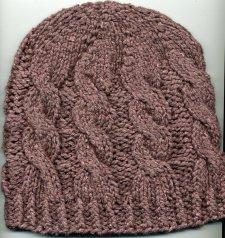
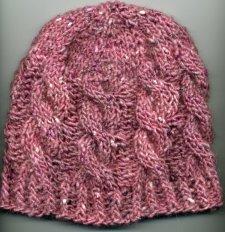
In hat-knitting mode, I've been using up a small stash of Chelsea Silk (65% silk, 35% wool) in a sort of natural heathery brown-blue-red. Because I didn't want to have three or four identical hats (my slogan is "Unique handknits") I tried dyeing one of them. I used a quarter teaspoon of pink Jaquard Acid dye, enough water to float the hat, and a quarter cup white vinegar. I cooked it all day in my second-string crock-pot (reserved for fiber dying), and I'm pleased with the results. Unfortunately, I have no better idea what to call this color than I had for the original undyed hat. Mauve?

Friday, September 02, 2005

Appalachian by Design

The store I was minding last weekend is called Appalachian by Design. Their stock-in-trade is knitwear made by rural women at home in Greenbrier County and assembled in Lewisburg. They make quality cotton knit baby clothes and women's woolen knit suits and separates. They don't sell over the Internet yet, but they list stores that carry their products.

The boutique at the Greenbrier is starting to sell some handknitting products, and while I was there, they asked me to knit this Debby Ware kit so they could have an in-store model. In my 40-year knitting history, this is the first thing I ever made from a kit. For most of my life I've been a knitter on a budget, and kits are more expensive than yarn and patterns bought at close-out time. Nowadays, I usually make up my own patterns, so I'm even less likely to buy a kit. However, if you're interested in my opinion, this pattern had interesting design features, enough yarn to make a second hat (in case you've got twins), and good, easy-to-read directions. It was an enjoyable project, but not a conversion experience for me.

Cupcake Beanie Kit by Debby Ware, cover photo

Wednesday, August 31, 2005

Beautiful, Historic Greenbrier Resort

Over the weekend, I minded a store on the grounds of the swank Greenbrier Resort. It's an amazing place. I had no idea how old some of the vacation cottages on the grounds are. There is a 1835 building called the "President's Cottage," a museum since the 1880's. Several hotel guests asked me about it (as the shop I was minding is right next door), and were disappointed to learn that it wasn't a Roosevelt or a Kennedy who slept there but rather five different pre-Civil War presidents: Van Buren, Fillmore, Pierce, Buchanan and Tyler. The Greenbrier Resort has a History page, but it doesn't even mention this fascinating structure. This is the resort to which Edgar Allan Poe's guardians brought him as a child, the place where German and Japanese diplomats were confined during World War II, the location of the underground bunker where Congress would be kept should the Ruskies decide to drop the Big One on Washington D.C.

Sadly, you can't just go see it. I quote the Greenbrier's Web page: "Access to The Greenbrier is limited to registered guests and club members. The resort does accept advance dinner reservations or golf tee times for non-registered guests. Access is provided to individuals attending planned group functions." No President's Cottage Museum for you low-life history fans. If I hadn't been having a shop-girl experience there, I never would have known about it.

Monday, August 29, 2005

Another Day, Another Hat

silk knit hat

I've been trying to get a few hats ready for Morning Star Folk Artsfor this fall. This one is 70% silk, 30% wool. I wasn't sure this yarn would work for a hat, but I'm pleased with the way it turned out.

Saturday, August 27, 2005

Nothing from Nothing's the Greer County Fair

When I was casting about for something to call this weblog, this song came to mind. It's a nineteenth century traditional ditty about homesteading. I like the phrase, "Nothing from nothing's the Greer County fare," because I've never seen it written out, and I don't know if it's "fare" or "fair." (The Lomax versions of this song don't include that couplet.) I have fewer complaints about the Pocahontas County fare than this singer has about Greer County, but the fare is sometimes only fair....well, never mind. It's a dandy song, and Greer County is an interesting place, because it has been part of Texas and is now part of Oklahoma.

Starving to Death on a Government Claim

My name is Bill Parsons, a bachelor I am;
You'll find me out West on an elegant plan.
You'll find me out West in a county of fame,
Starving to death on a government claim.

(Chorus)
Hurrah for Greer County, the land of the free,
The home of the grasshopper, bedbug and flea.
I'll sing of its praises, I'll tell of its fame
While starving to death on a government claim.


My house it is built of the natural sod;
My walls are erected according to God;
My roof has no pitch but is level and plain;
You'll always get wet if it happens to rain.

(Chorus)

My clothes they are ragged, my language is rough.
My bread is corn dodger, my goodness how tough!
Nothing to eat, and nothing to wear:
Nothing from nothing's the Greer County fare.


(Chorus)

How happy am I when I go to my bed;
A rattlesnake hisses a tune at my head.
A gay little centipede, free from all care,
Creeps out of my pillow and into my hair.

(Chorus)

Come all you homesteaders, take warning by me:
Don't live with the grasshopper, bedbug and flea.
I'm going back East, to find me a wife,
And quit this corn dodger the rest of my life.

(Chorus)

Thursday, August 25, 2005

Multicolored Asian Lady Beetles and the Black Helicopters

Multicolored Asian Lady Beetle on a sprig of apple mint

I was cleaning out the pantry the other day, making room for my newly filled pint jars of calico relish, spaghetti sauce, and tomato preserves, when I swept up the carcasses of a dozen lady bugs. If I'm lucky I will finally sweep out the last dead lady bug from last year the day they start coming in the house in the fall.

The problematic insect in question is the Multicolored Asian Lady Beetle. It looks rather sweet in this photo. You don't see the 10,000 other lady bugs that were swarming over my house, last October, looking for a crack to crawl in. These critters are exotics, their populations unchecked by predators and disease, and in the fall they aggregate and fly in big clouds. I was driving over Kennison mountain last fall on a beautiful, sunny day when I drove smack into one of these swarms. I had to pull over and wash off the foul-smelling haemolymph so I could see to drive. In the winter, the little darlings treat you to a whiff of this stuff whenever you brush against one as it crawls on your computer, around your lamp, on your furniture, up your nose....They also bite.

The extension fact sheets from Penn State and Cornell differ on whether these critters were intentionally or accidentally introduced. Some people in Pocahontas County favor a conspiracy theory, in which people heard planes fly over, and were immediately pelted by a rain of lady bugs. Here on Droop Mountain, we've watched swarms come down like rain, without benefit of planes, black helicopters or other interventions.

Tuesday, August 23, 2005

Long Distance Invisible Insect Identification

Fred First, of Fragments from Floyd, over in Floyd County, Virginia, has been troubled by a Bully Bee on his white butterfly bush. In turn, I have been troubled by my inability to identify this creature. Fred's observation of the Bully Bee killing a skipper convinced him that it was a predaceous wasp.

Of course, I thought. A sphecoid of some sort, or a big vespoid, provisioning its nest with live but paralyzed prey for the wasp larvae to eat. These are wonderful creatures. As a child, I spent hours watching black-winged orange wasps provisioning their burrows with caterpillars, and when I lived in Our Nation's Capital, I was delighted to see and hear cicada killers at work.

Yet something seemed wrong. Most of these predaceous wasps specialize in particular types of prey. Some only feed their offspring spiders. Some only prey on bees. I'd never heard of any that went for adult lepidopterans, and none of them sit on branches, devouring their prey. Was Fred mistaken about this? Then it dawned on me. Robber flies. Ferocious, indiscriminate predators. There are some big ones here in Pocahontas County, and I've mistaken them for hymenopterans more than once.

So, that's my latest identification of this insect I've not seen or heard. If I'm right, I'm going to hang out a shingle as "Psychic Entomologist of the Blogosphere."

Sunday, August 21, 2005

A Little Light Knitting

I always have some knitting project going forward, but lately, my knitting has been, well, boring. I've been re-styling some of my old hand-knits, unraveling and re-knitting sleeves and neck bands, cutting pullovers down the front, thereby turning them into cardigans, over-dying sweaters for new colors. My only new projects have been hats, of the type called: toques, stocking caps, watch caps, toboggans, beanies, ski hats. Morning Star Folk Arts in Hillsboro sold about a dozen of my hats last winter, and a few skeins of handspun yarn as well. I've been knitting hats like this pink mohair one since spring, in the hope that the shop could use a few more this coming winter. I have not, however, produced up to my expectations. If I hope to have a selection for possible sale, I need to get crackin'.

Friday, August 19, 2005

Jim Comstock and The West Virginia Hillbilly

I just returned this book to the library: Best of Hillbilly: A prize collection of 100-proof writing from Jim Comstock's West Virginia Hillbilly. This delightful book is out of print, but used copies are available at Amazon.com from time to time. Jim Comstock published his newspaper in Richwood, WV, not all that far from us in Pocahontas County, and he had a rivalry with Cal Price, the late editor of the Pocahontas Times. I love to reread "The Richwood Panther Hoax," perpetrated by Comstock on Price (pp 47-60).

For another Pocahontas County literati connection, check out the dust jacket blurb by Pearl S. Buck.

For years I have followed The West Virginia Hillbilly. Witty, colorful and independent, Jim Comstock speaks the truth as he sees it and knows it. The cream of everything he has said is in this book. It is perfect Americana.

You can get a little taste of Comstock and his style from this 1975 interview by Dave Peyton.

Wednesday, August 17, 2005

Local sheep to local fleece to local yarn

My handspun wool, dark pink

A neighbor gave me some fleece he had stored in his barn from the days when he raised Suffolk/Dorset sheep. Some of it was very nice, some of it wasn't. I washed it all this past spring, and I've been experimenting with the less nice portions of the fleece to see what could be done with it.

Dying it in the crock pot a half pound at a time took out a lot of the "vegetable material." (That's a euphemism spinners use. That stuff is vegetable material, all right, but a lot of it was inside the sheep before it was on the outside, if you take my meaning.) Carding it cleaned it up further, and lots more non-wool stuff fell out in the spinning.

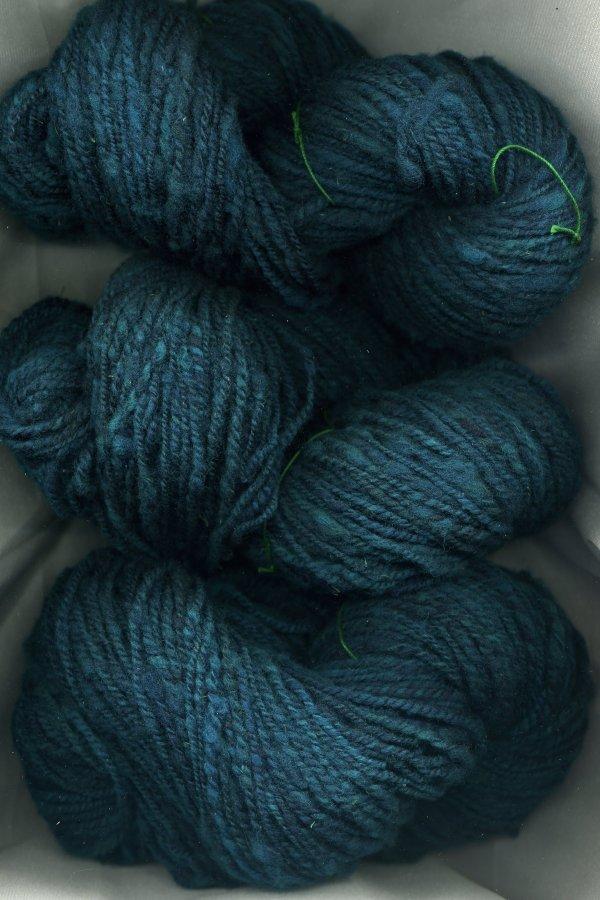
My handspun wool, dark teal

By the time I plied the yarn and washed it again, it proved to be nice and soft and perfectly functional. Spinning mavens tell you to stay away from this sort of wool, and I suppose many people would find it discouragingly slow spinning, but I like to see what can be done with the materials at hand. These are a couple of half-pound batches I've spun this summer.

Monday, August 15, 2005

Edgar A. Poe in Greenbrier County

Book cover: Edgar A. Poe: Mournful and Neverending Remembrance

A new book for my Recent Reading list is Kenneth Silverman's 1991 biography, Edgar A Poe : Mournful and Never-ending Remembrance Paperback: 592 pages. Harper Perennial; Rep edition 1992. ISBN 0060923318. It's an outstanding biography, as I said before. Check the amazon.com reviews--they have good information about Poe and this biography.

This book has given me fodder for my Literary Pocahontas project, provided I can extend my geographical limits just a little bit. It seems that John and Fanny Allan, Poe's childhood guardians, summered with him in nearby White Sulfur Springs (now Greenbrier County, West Virginia) to escape Richmond's heat and epidemics. Could the melancholy turn of the Allegheny Plateau have affected his young mind?

I can also link Poe to Musical Pocahontas County. When Poe was a small child, Richmond, his hometown, was growing rapidly because of water power derived from the James River's falls at Richmond. There's an Eddn Hammons fiddle tune called "The Falls of Richmond." A number of writers have suggested that it should be "The Fall of Richmond," referring to Civil War engagements. Because the falls at Richmond were of great renown, this book offers a bit of support to those who believe Eddn Hammons' tune title is antebellum.

There are worlds of Edgar A. Poe references on the Internet, from scholarly reviews to teenage fansites. Here are a few I thought were interesting.

  • The Complete Works of Edgar Allan Poe: Just what it says: all the published stories, poems and reviews, available without charge or annoying advertising.
  • The Edgar Allan Poe Society of Baltimore: Many essays, resources, and links. I found this the most informative of those Web sites I visited.
  • The Edgar Allan Poe Museum--Richmond, Virginia: A slick Web page, with worthwhile links and some well-presented information on Poe's life, the museum site also boasts Poe products, such as the Annabel Lee T-shirt, the Poe bobble-head doll, and the Poe action figure with detatchable raven. Pretty scary stuff.
  • The Work of Edgar Allan Poe: More Poe resources and Internet links. This site is more like a fansite than those previously mentioned, but still contains some links I found useful. It also offers a way into the Poe fansite world, if that's what you're looking for.
  • Edgar Allan Poe Mystery: The 1996 press release claiming Poe died of rabies.
    In an analysis almost 147 years after his death, doctors at the University of Maryland Medical Center believe that writer Edgar Allan Poe may have died as a result of rabies, not from complications of alcoholism. Poe's medical case was reviewed by R. Michael Benitez, M.D., a cardiologist at the University of Maryland Medical Center. His review is published in the September 1996 issue of Maryland Medical Journal.
    Well, it put another publication on his curriculum vitae, it came out in time for Halloween, and the UM Medical Center is just a couple of blocks away from Poe's much-visited grave.