Showing posts with label knitting. Show all posts

Thursday, March 08, 2012

Knitting Down Memory Lane

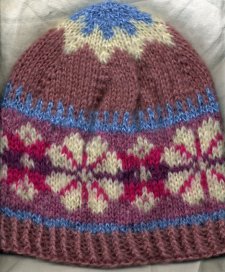
pink mohair Fair Isle hat

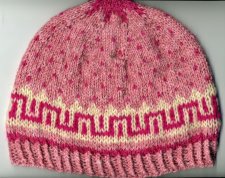
I've been knitting hats again. I haven't figured out a good way to photograph hats, but I remembered that I have some hat images from this blog, 2005. At that time, I didn't have a digital camera, so I slapped these hats on my flatbed scanner before I consigned them for sale. These look OK squashed flat, I think, because the colors draw the eye. Cabled hats displayed flat have a shriveled, sad look.

The skullcap style hats don't look so great on my own "cannonball" head, and I don't have a mannequin, so I'm brainstorming for some suitable form to make cabled hats look nicely three-dimensional.

Pink wool colorwork hat White Fair Isle mohair hat

Wednesday, March 07, 2012

Wild Silk

Yesterday, I needed to make a label for a hat I'd knitted from some 1980's-vintage silk yarn. The search engines showed me this excellent (but not new) article: Silk is the Bomb[yx] (Knitty, Spring 2006) by Michael Cook. Here's what I needed to know:

Species silks, or "wild" (actually semi-domesticated) silks, used to be very hard to find. Nowadays, hand knitters and spinners can get Tussah fibers and yarns in a wide range of colors and preparations, and some vendors even offer Eri and Muga yarns and fibers. Each of these is produced by a different species of moth. In India, which is where most of the wild silks are produced, they are called "vanya" silks; these silks each have a distinctive feel and color, and they are a treat for the hand spinner.

I was equally charmed by Michael's website, where his blog features wonderful chickens as well as all the giant silk moths a gal could wish for. I guess eggs are the common denominator.

Tuesday, March 06, 2012

Sweater-Knitting with a Sewing Pattern Template

I haven't knit a sweater for a long time, mostly because I haven't been pleased with the fit. I've tried dozens of approaches to alterations, and I've unraveled every one. This winter, I had an idea--why not knit a sweater using a successfully-altered sewing pattern as a template?


I hauled out my much used, much altered Kwik-Sew 2900, selected a couple of lace patterns from my Barbara Walker library, and grabbed some soft and fuzzy synthetic yarn that I got cheap long ago (during the G.H.W. Bush administration in College Park, Maryland, I think).

I knit the cardigan top down, and eventually, it was all one piece. I started at the top because running out of yarn near the bottom is preferable--you can make it a shorter sweater or swap in some other yarn and act like it's a design detail. Also, I rely on frequent tryings-on to check fit and appearance.

Knitting to match pattern pieces would be much easier if one were content to knit flat pieces and sew them together, and sensible people avoid knitting set-in sleeves from the top down, but if I were sensible, I'd order an ill-fitting cardigan from a catalog and just put up with it.

Here follows a tediously detailed description of my method, suitable for some idle moments. (Don't feel obliged to read it.)

I cast on stitches for the width across my shoulders, and knit the top of the back first, shaping the arm scythe by adding stitches on each side. (Circular needles are the way to go here, because there are going to be lots of needles with knitting on them for a while.)

When I was almost done shaping the arm scythe, I got more needles, went to the cast-on, and picked up stitches to make the left side front. I knit downward, shaping the neck edge and the arm scythe by adding stitches at the edges, and I managed the full bust adjustment by making three sets of short rows, which work out to be three nice little darts around the armhole and underarm area. (I tried it on frequently at that point.)

Then I did the same thing for the right front. At this point, I had three sets of needles flapping in the breeze, and I needed to add some more stitches at the underarm areas so the sweater would go around me. I had the extra complication of lace panels down the front, which needed to be on the same pattern row or the cardie would look cock-eyed, and I'm probably not attentive enough to keep track of two different spots in a lace pattern.

This was the least fun part. I made sure I had both sides of the front on the same pattern row, and I figured out how many stitches I needed to add at each underarm. I didn't have exactly the same number of stitches on each side front piece, so this is where I needed x more stitches on the left side and y more stitches on the right side to achieve sweater symmetry.

I picked up the left front needles at the cardie opening point, knit around to the end of that piece, cast on x stitches on that needle, then grabbed the needle with the back on it, and knit it onto the same needle as the left front.

Then, I cast on y stitches to the now-quite-full needle, grabbed the needle with the right front on it, and knit across. At last, I had all three chunks of knitting on the same needle. I knit even for a few more inches, and tried it on again, and, fortunately the fit was fine.

I picked up stitches at each shoulder to match the width of the sleeve cap pattern piece--about three inches.I knit back across, picked up a few more stitches, turned and knit back, picked up a few more stitches, turned and knit back, etc. I decided how many stitches to start with and to add at each repeat by holding the sleeve cap pattern up to my knitting. Eventually, I picked up stitches all the way around the armhole, and started knitting in the round. I shaped the sleeve down to the cuff by decreasing whenever it looked right.

I finished both sleeves, and then resumed knitting the body until I ran out of yarn. Then I crocheted the front bands with a different yarn. (I've never knit a really successful button band.)
Wednesday, February 08, 2012

Staircase Spiral Mohair Socks


It's another pair of fine-gauge mohair socks, finished last week with yarns from the Reagan administration. I still have a small collection of odd balls of fine-gauge luxury yarns like this mohair. I was especially attracted to the shades of pink we favored in those days, and this intense fuchsia yarn looked appealing next to this pale gray.


I love to use odd balls of yarn to knit Fair Isle patterns, but I am over-supplied with heavy socks, so I chose a slip-stitch pattern from Barbara G. Walker's A Treasury of Knitting Patterns. These patterns only use one strand of yarn per row, so they don't add much bulk (or warmth) to the finished socks. This is "Staircase Pattern," on page 65 of my edition.


Sunday, February 05, 2012

Authentic Period Doll Clothes

A year ago, I unboxed my grandmother's doll, cleaned her up, and determined to make a period dress for her. She's still sitting on a bookshelf, in her underwear, like many of us who work from home. The rules I found on period costume for antique dolls seemed to kill the fun of making doll clothes. This fabric was inappropriate, that trim was a synthetic fiber, any style ideas I had were not authentic. It was as if I had invited a really pedantic Civil War reenactor to live in my head.

My own dolly (from Christmas, 1962) was also inadequately attired. This year, when I dragged out the Christmas decorations, I was inspired to dress her up. She's a "Tiny Tears" doll, one of the types that you could "feed" water with a scale model baby bottle, and then you'd have to change her diaper. She has "tear ducts" that would also leak water. The little pink and white dress she came in has long since vanished, but it occured to me that the pastel baby yarn I had recently used for socks would be adequate to knit a dolly layette. I looked at a vintage knitting book from my mom's 1950's collection, and just made up a pattern for the "soaker" and the knit lace jacket. It entertained me greatly for a couple of evenings, and I feel confident it's "authentic" in style and materials.

Saturday, January 28, 2012

Feature-Rich Rambouillet Wool Socks

Here's my most recent knitting--socks from my crock-pot-dyed, hand-spun Rambouillet fleece. Several years ago, I decided that this neppy, lumpy wool was not a failure, but an interesting exercise in color and texture: It's Not a Nep, It's a Feature. I tried out a few interesting rib and cable patterns, but they lost all definition in this "highly-textured" yarn, so in the end, it was plain old "Knit 2, Purl 2" ribbing. It was a fun, mindless knit, and these soft, soft socks are a treat to wear.

Wednesday, January 25, 2012

Pastel Pier Glass Socks

Here's another pair of socks from 2011, using oddities from my vintage yarn collection. This yarn is the same stuff I used for Heraldic Socks-- a "baby weight," pastel called "Peter Pan by Wendy." The fiber content is 55% nylon, 45% acrylic. To my surprise, the white Heraldic Socks are quite comfortable (so many acrylics make one's feet sweat miserably), and they are refreshingly easy to wash.


I used Barbara Walker's Pier Glass Pattern from A Second Treasury of Knitting Patterns, p. 148. The pattern looks complicated, but it's just a nice, fancy ribbing that's interesting to knit, but not so "interesting" that you get totally confused. (At least, I didn't get confused, and I'm sometimes rather...inattentive.)


Monday, January 09, 2012

The Long and Short of Writing Practice

Via Mirabilis.ca: A long sentence is worth the read --by Pico Iyer.

Not everyone wants to be reduced to a sound bite or a bumper sticker. Enter (I hope) the long sentence: the collection of clauses that is so many-chambered and lavish and abundant in tones and suggestions, that has so much room for near-contradiction and ambiguity and those places in memory or imagination that can't be simplified, or put into easy words, that it allows the reader to keep many things in her head and heart at the same time, and to descend, as by a spiral staircase, deeper into herself and those things that won't be squeezed into an either/or. With each clause, we're taken further and further from trite conclusions--or that at least is the hope--and away from reductionism....

Years of writing technical and scientific papers matched with my current practice of Web writing have coached me to appreciate the short and succinct, but my own prose runs to the baroque and confusing. I look forward to Sherry's and Dave's 140-character word snapshots, and I spent some time considering joining the River of Stones project, but my trite attempts seem more like "sound bites" and "bumper stickers" than Fiona's mindful writing practice:

A small stone is a very short piece of writing that precisely captures a fully-engaged moment. There are no strict rules for what makes a piece of writing a small stone, as there are for forms such as haiku. The process of finding small stones is as important as the finished product--searching for them will encourage you to keep your eyes (and ears, nose, mouth, fingers, feelings and mind) open.

I truly appreciate well-written instruction manuals, field guides, taxonomic descriptions, and crochet patterns. I reread Elizabeth Zimmermann's knitting books just for fun as often as I refer to them for techniques. They are special because they offer a little more than bare-bones instructions, but not so much blather that you lose track of the procedure. (I'm afraid my own instructions are blather-heavy.) I'm skilled with observation of detail, but haiku writing appears to be contrary to my nature. Pico Iyer gives me hope for when he says "...[T]he promise of the long sentence is that it will take you beyond the known, far from shore, into depths and mysteries you can't get your mind, or most of your words, around."

Tuesday, March 08, 2011

Heraldic Socks

I've finished another pair of socks from my vintage yarn collection. This yarn is what they used to call "baby weight," and judging by the label and the pastel color palette, "Peter Pan" by Wendy was intended for baby clothes. The fiber content is 55% nylon, which made me think it would make long-wearing socks. If the nylon/acrylic fibers are uncomfortable in shoes (as is sometimes the case) I'll have a nifty pair of bed socks for cold nights.

I used Barbara Walker's Heraldic Pattern from A Second Treasury of Knitting Patterns, pp. 150-151. It's a pattern I've wanted to try for many years, but I had great difficulty converting the back-and-forth, flat knitting direction to in-the-round directions, mostly because every stitch is, at some point, twisted with another stitch. The odd directions in rows 23, 25, 31, and 32 reflect the way I worked around this.

The end result of a seamless tube of diagonals is very pleasing. I'm going to have to use this pattern on another pair of socks if only to justify the time I spent working out the "round and round" directions.

Barbara Walker's Heraldic Pattern
Multiple of 12 stitches, knitted in the round
Row 1: *K2, P4*
Row 2: *RT, K4, LT, K4*
Row 3: *K2, P4*
Row 4: Knit
Row 5: *K2, P4*
Row 6: *RT, K4, LT, K4*
Row 7: *K2, P4*
Row 8: *K1, LT, K2, RT, K5*
Row 9: *K3, P2, K3, P4*
Row 10: *K2, LT, RT, K6*
Row 11: *K8, P4*
Row 12: *K3, RT, K7*
Row 13: *K8, P4*
Row 14: *K2, RT, LT, K6*
Row 15: *K3, P2, K3, P4*
Row 16: *K1, RT, K2, LT, K5*
Row 17: *K2, P4*
Row 18: *LT, K4, RT, K4*
Row 19: *K2, P4*
Row 20: Knit
Row 21: *K2, P4*
Row 22: *LT, K4, RT, K4*
Row 23: *K2, P4* Last repeat, K2, P3. Slip last stitch
onto next needle, making it first stitch of next row.
Row 24: *RT, K6, LT, K2* 
Row 25: *K3, P4, K3, P2* At end of last repeat, slip
first stitch from next row onto working needle, knit.
Row 26: *K8, LT, RT*
Row 27: *K2, P4, K6*
Row 28: *K9, LT, K1*
Row 29: *K2, P4, K6*
Row 30: *K8, RT, LT*
Row 31: *K2, P4, K3, P2, K1* Last repeat K2, P4, K3, P2
Slip last stitch onto next needle, making it
first stitch of next row.
Row 32: *LT, K6, RT, K2* At end of last repeat, slip
first stitch from next row onto working needle, knit.

Sunday, February 13, 2011

Knitting Meets Patchwork!

Last summer, I had no time for fiber fun, but with too many jobs came enough cash to hit a half-price book sale at Interweave, which I think of as "Eye-Candy Central" for fiber arts. One of the gems I'd been wishing for was Domino Knitting by Vivian Hoxbro. The patchwork appearance of her knitted fabric really appealed to me, but I was mystified by the technique. I assumed it would be something simple, that the rest of the book would be pretty pictures of knitted things, and I would regret spending money on a whole book of eye-candy. (It's happened before.) Finding it on sale after eight or nine years of wishing for it, I finally bought it.

I was delighted to find that it was more than a pretty book and a simple technique. I was inspired by the different ways projects can develop, and I had to try her "Learn While You Knit" projects. My cotton yarn odds and ends didn't knit up nicely, so I used acrylic yarn scraps to make this "pot-holder." Because acrylic yarn can melt, I decided to transform the 16-square fabric into a vest for my teddy bear. With a few extra squares knitted on for the front, it seems to fit him perfectly.

Here are some Web-based inspirations for modular or "domino" knitting.

Domino Knitting (Knitting Technique series)

Tuesday, January 25, 2011

Wave and Box Socks

OK, this is the fifth and final pair of socks in my series of "Disappointing Silk/Wool Yarns by Rowan." This color work pattern allowed me to use nearly all the remaining "Silkstones" silk/wool blend. The silk in that discontinued yarn consists of short, hard-to-spin fibers. They add some bulk and warmth to the yarn, but the main thing they do is take dyes beautifully. That's the lure that hooked me into buying the yarn in the first place. I'm a sucker for pretty colors.

These socks display a slip-stitch pattern that's fascinated me for a long time. It appears in Barbara G. Walker's A Second Treasury of Knitting Patterns on page 44 (in my edition, anyway). She calls it "Wave and Box Stitch." Knitted in a springy yarn, the stripey parts of the design spread out in the middle, and are drawn up by the boxy bits. This silk yarn doesn't play up the "wavy" part of the pattern, but it was fun to knit.

"Wave and Box Stitch" is confusing to knit flat, and the instructions in A Second Treasury of Knitting Patterns require that you use double-pointed or circular needles, and sometimes there will be two consecutive rows on the right side or two consecutive rows on the wrong side. But if you work it in the round, the instructions are super-simple, and easily explained.

Here, "Color A" is the color the "boxes" will be (in the case of my socks, the medium blue), and "Color B" is the color of the stripes (either white or navy on my socks).

Multiple of 10 stitches.
Odd-numbered rows are knitted with Color A.
Even-numbered rows are knitted with Color B.
Row 1 (and all odd-numbered rows): Color A, *Knit 10*
Row 2: Color B, *K10.*
Row 4, 6, 8: Color B, *slip 3 st, K7.*
Row 10: Color B,*K10.*
Rows 12, 14, 16, Color B, *K3, slip 3, K4*

Monday, January 24, 2011

Knitted Fuchsia Flowers in Ivory Silk

These socks are the fourth pair in my series of "Disappointing Silk/Wool Yarns by Rowan." By that, I don't mean the socks are disappointing, just that the silk/wool blends were not pleasant to knit. The heathery blue yarns were known as "Grainy Silk," and the solid colors (seen above and here) were "Silkstones." They looked luscious in the skeins, but the strands break easily and are inelastic in the knitting. In the wearing, they stretch out and don't spring back, making for slouchy socks. Fortunately, the silk/wool blend is warm and toasty to wear, and I don't mind slouchy socks.
The yarn is just too string-like for Fair Isle patterns, twist-stitch patterns, cable patterns, or any of my other sock-knitting preferences. This time, I thought I would try a bit of open-work, and find out whether I like wearing lacy socks.
The pattern I went with is from Barbara G. Walker's A Treasury of Knitting Patterns. It's found in her "Patterns Made with Yarn-Over Stitches" Chapter (page 149 in my edition), and it's called "Fuchsia Pattern." I'm assuming it's after the lovely pendant flowers, not the color.
If I were naming the pattern, I'd be inclined to call it Virginia Bluebells, but, according to Ms. Walker: This is a popular pattern in traditional knitting, known in some form or another throughout Europe. This particular version is German. Perhaps that is reason enough to name it after a flower that is itself named after a Bavarian botanist, Leonhart Fuchs.
In any case, the pattern is easy and makes a pretty ribbing. I will soon know whether I like wearing socks knit with sizable yarn-over "holes."

Monday, December 27, 2010

Little Sock Prints in the Snow

I got to knit someone else a pair of socks for Christmas! (I am not surrounded by sock petitioners, and I hesitate to force unwanted hand knits on people who prefer to toss cheap cotton socks in the washer and dryer and trash basket.)

This time, a durable pair of heavy wool socks (in a manly color) were required for rubber work boots in cold weather. I made these from a single four-ounce skein of Germantown wool--my favorite for warm utility wear. I knitted the heels and feet holding a single strand of wool and a strand of wooly nylon, and I knitted them tightly, as you can see from the way the ribbing compresses itself. I knocked these out in three evenings, and it was really fun to finish something so quickly.

Tuesday, November 30, 2010

Silk Socks--Navy Pennants

Here are the latest socks from my collection of disappointing silk skeins. In the early 1990's I found several discounted skeins of "Grainy Silk," from Rowan yarns. They formed a series of different intensities of indigo dye, and I thought surely they'd make a lovely, subtly-shaded Fair Isles sweater vest. I swatched and swatched, but the yarn has no elasticity at all, and stranded knitting looked and felt quite dreadful.

Cables and twist-stitch patterns were equally unsuccessful. The only viable choice for patterning seems to be knit-purl patterns. I fell back on this "Pennants" pattern, which behaves as a ribbing, making the socks a little more flexible.

The afternoon sun makes the socks look black, but these skeins were actually the darkest of the indigo series.

Monday, November 01, 2010

Silk Socks--Still More Stripes

More of the navy blue silk yarn, with more stripes of mohair scraps. This time, I made what Elizabeth Zimmermann called "Afterthought Heels," because I wanted to make sure I remembered how to do them.

Saturday, October 30, 2010

Silk Socks--More Bargain Shopping from Long Ago

There was a lovely yarn shop at Dupont Circle called The Woolgatherer, and I haunted the sale bins there in my grad school days. There was a line of Rowan yarns, silk and wool, with subtle mixes of glorious colors, priced well above my reach. It was seductive on the shelf, and I bought odd dye lot skeins as they turned up in the sale basket. Sadly, these subtle skeins produced knitted fabric that was simply "brown," or in this case, "navy blue." Pairing it with other colors failed to awaken the colorful slubs and neps.

I've used it as a background for these odds and ends of mohair. I love knitting Fair Isle patterns, but the silk yarn is too inelastic to make comfortable socks that way. The simple pattens here are slip-stitch.

Friday, October 29, 2010

The Year in Socks--Pink Mohair Pizazz

I bought this partial skein of variegated pink mohair yarn in the 1980's, long before the development of commercial self-striping yarns that are so popular now. It was on sale, and I was sure I would blend it with some other yarns for a lovely sweater. Unfortunately, the shades of pink never matched anything else (except this old quilt of mine).

Spring cleaning and organization inspired me to pair it with a partial skein of white to knit these striped socks. Of course, they're not simply striped--they're dappled, pink, "plotted and pieced—fold, fallow, and plough." They have pizazz.

Sunday, March 21, 2010

Long-Deferred Socks Complete At Last

I started knitting these socks as part of Sharon B's fiber arts community Take It Further Challenge, February 2008. My participation in her inspirational project fell by the wayside due to an unexpected work opportunity and the building of our new house, and the socks also stalled.

Originally, I planned to knit a dainty texture pattern on my smallest steel needles, with this machine knitting wool held double.

Unfortunately, fine yarn held double played the devil with all the twist-stitch patterns I tried. I couldn't keep from splitting the yarn, so I fell back to knitting this sort of wide, plain rib pattern:

Columbia Minerva sock pattern, 1947

It was slow going at this gauge, but after I'd knitted about four inches of the top, I knew something wasn't working well. It looked nice enough:

However, the stockingette stitch was rather loose, even with my tiniest needles, and I've found that loose-knitted socks are very uncomfortable inside shoes. You end up with a mesh pattern embedded in the soles of your feet. So, I unraveled again, and this time I knitted with four strands of yarn held together. This was bulkier than fingering weight, but finer than sport weight, and it produced a nice fabric. I chose a knit-purl design to make these fancy ribs, and I used a strand of wooly nylon to reinforce the heels and toes.

Sunday, February 21, 2010

Red Mohair Cap and the Ghosts of Knits Past

Add this little hat to my minimal knitting projects for 2009. The scarlet mohair came from my Regan administration yarn purchases, while the hat pattern is a recreation of the first wearable knitting project I ever completed. All in all, it was a walk down Knitting Memories Lane.

Saturday, February 20, 2010

Free Crochet Patterns, Especially Old Ones

I have a decent collection of crochet patterns. My grandma left a collection, and some of my mom's knitting leaflets also include crochet patterns. After I learned to crochet, I subscribed to some crochet newsletters for a couple of years. I could crochet from this library until the end of my days, but there's that itch to see something new....Fortunately, I can indulge this without buying stuff, thanks to Websites like these:

  • Crochet Pattern Central is a great place to start. It's a curated link directory, and it's actively updated.
    Welcome to Crochet Pattern Central--an often updated online directory featuring thousands of links to free crochet patterns. Choose from 90+ categories, including clothing, afghans, doilies, baby items, bags and totes, potholders, toys, stuffed animals (including amigurumi), and so much more.
  • The Antique Pattern Library is the Project Gutenberg of the needlecraft pattern library. On their "Welcome" page, they say

    This ongoing project is an effort to scan needlework pattern books that are in the public domain, to preserve them, so we can keep our needlework heritage in our hands. These scans have been photoedited to make them more useful for needle workers, and to reduce file sizes. They are available, for free, to anyone who wants them, for educational, personal, artistic and other creative uses.

    Their collection of crochet patterns is awesome, especially for those who like working with fine gauge crochet thread, as opposed to yarn. I have a real fascination with crochet lace collars and nightgown yokes from about 1900 to 1940, and I've scored dozens of gorgeous patterns. Now, to develop my skills to that level....Be prepared, if you start downloading, for a time-sink, not because the website is slow, but because these collections are quite addictive. I'm unlikely to do purse netting, silk embroidery, or tatting, but you should see the awesome patterns I've got, just in case...

  • The Free Patterns page from Heirloom Crochet has some wonderful old patterns for free. There are also many vintage patterns are for sale, but I'm a little unclear on her business model.

I joined the knitters' social network Ravelry a couple of years ago, but found it disappointing. I didn't like the social interaction--I got flamed for submitting a very polite bug report, for heaven's sake, threats of violence and all. The tone of dialogue is just not my style--one of the newsletter feature writers calls herself "Auntie BubboPants." Whatever floats your boat, but not for me, thanks. However, in my hunt for free crochet pattern novelty, I did revisit Ravelry's crochet section, and found it much more to my liking. I think there are two reasons for this--one, the crochet community is smaller, and that means a better signal-to-noise ratio. That is, more crochet talk, less general conversation. The second reason I like it better is that I'm a novice crocheter, and Ravelry probably works better for novices than for long-time afficianados. There's just more new stuff for a novice to see there.